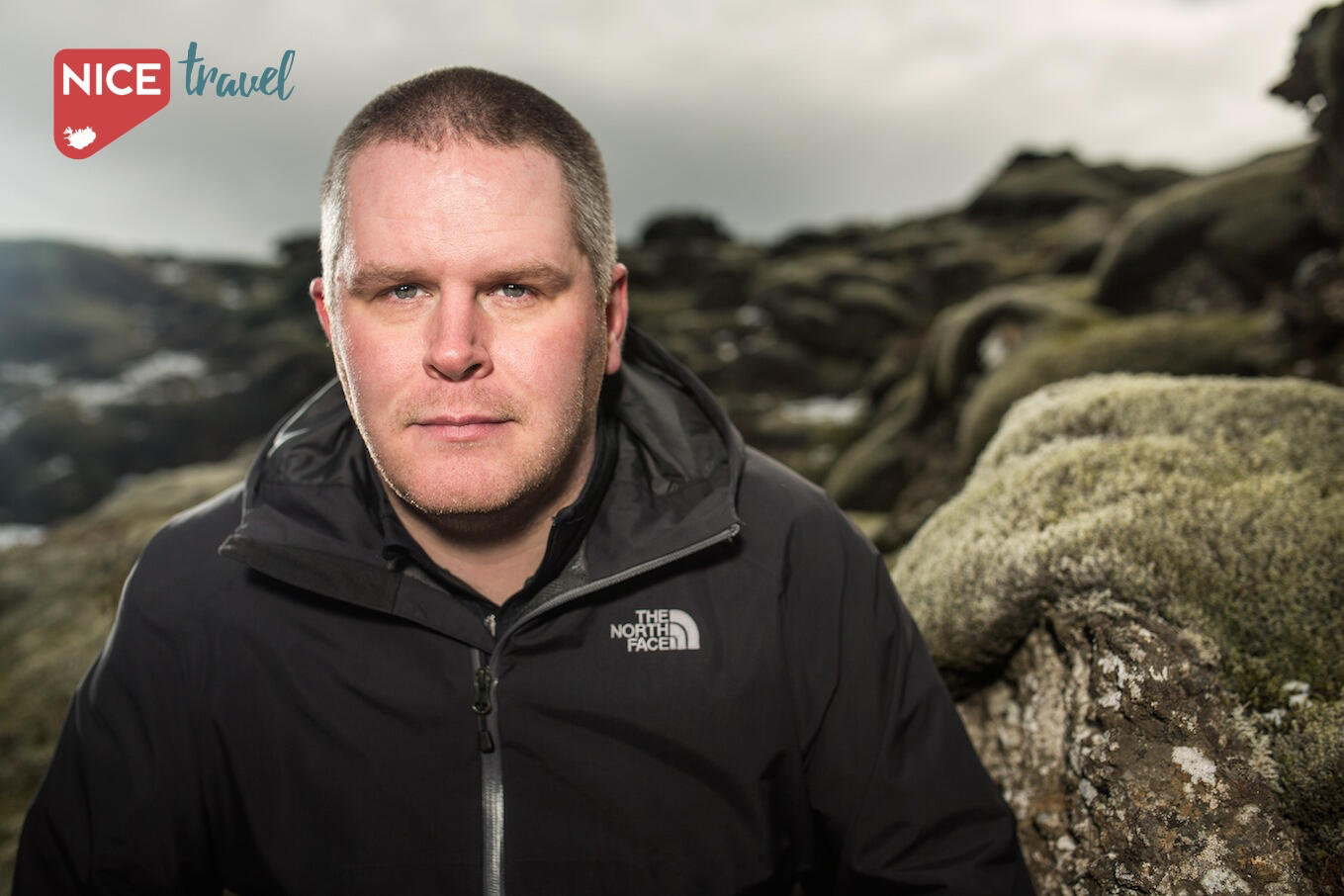
Sammi Richter
Tourguide
Bus Rules
- Do not open the rear luggage doors without telling the driver first.
- No smoking or vaping in the Bus.
- No eating fast food in the Bus (fx. Burgers, Hot Dogs, Fish & Chips, Pizzas, Soups, or anything that has strong food odors). Snacks, candy, salats, cold sandwiches, drinks and coffee is OK.
- Please keep the Bus tidy along the way. If you need a trash bag, then ask your guide.
- No wearing ice spikes (crampons) in the Bus.
- Please wear your seat belt whenever the Bus is in motion. In Iceland, all bus passengers must use seat belts when they are fitted. The fine is 20.000 kr for each passenger over 15 years old, so it is better to be safe than sorry.
- There are no covid restrictions in Iceland, so there is no need to wear a facemask in the Bus. However, if you want to wear a facemask then you can do so.
Population
- Iceland = 395.050
- Capital Region = 252.580
- Keflavík / Njarðvík = 22.377
- Akureyri = 20.159
- Selfoss = 10.478
- Ísafjörður = 2.679
- Egilsstaðir = 2.632
- Höfn = 1.764
- Vík = 639
Politics
Iceland is a republic with a directly elected president. The president formally nominates the prime minister. The Althing (Alþingi) is the parliament and highest authority in Iceland. Although Iceland is not an EU member, it is a signatory to the EEA Agreement, so is part of the European Economic Area. Iceland is a member of NATO.
- National day: 17. June (Independence Day)
- Form of government: Republic
- Parliament: Alþingi (63 seats)
- Member of the EU: No
- Member of the EEA: Since 1. January 1994
- Member of NATO: Since 4. April 1949
- Head of state: Halla Tómasdóttir (President)
- Head of government: Kristrún Frostadóttir (Prime Minister)
Income Tax
Icelandic income tax is progressive. In 2026, salary withholding tax is 31,49%, 37,99% or 46,29%, depending on monthly income.
Everyone aged 16 and older gets a personal tax credit of 72.492 kr per month. Unused personal tax credit can roll over from month to month, but it expires at the end of the calendar year.
Sales Tax
In Iceland, sales tax is called VAT. It is normally already included in the price you see in shops, restaurants, and hotels.
- Standard VAT: 24%
- Reduced VAT: 11% for many visitor basics, including food, books, accommodation, and passenger transport
Housing Cost
Housing in Iceland is expensive, especially in Reykjavík and the Capital Region. Prices are usually lower outside Reykjavík, but popular towns can still be expensive.
- Small Reykjavík apartment: about 45-70 million kr
- Family-sized Reykjavík apartment: about 70-110 million kr
- Reykjavík detached house: often 120-170+ million kr
Rounded examples for conversation, not exact property valuations.
Geography
Iceland is two and a half times the size of Denmark, but only a little over 1% of the land is fit for growing crops. Most of the landscape consists of big lava fields and glaciers.
- Total area: 103.492 km²
- Lakes and rivers: 2.656 km²
- Longest river: Þjórsá 230 km
- Ice caps and glaciers: 10.500 km²
- Ice-free area: 92.692 km²
- Arable land and gardens: 1.290 km²
- Forests: 1.907 km²
- Largest lake: Þingvallavatn 82 km² (114m deep)
- Ring Road Distance: 1.332 km
- Coastline: 6.088 km
- Highest point: Hvannadalshnúkur 2.110 m
Climate
Iceland has a coastal climate that balances between cold polar currents and the warm Gulf Stream. The summers are cool and the winters are mild. The average temperature in Reykjavík is +0.4°C in January and 12.5°C in July. The average for the whole year is 5.5°C. The northern coast and most inland areas have a tundra climate.
Average temperature in Reykjavík: 5.1°C (max. 21.4°C, min. -10.0°C)
The Language
Iceland has been a very isolated and linguistically homogeneous island historically, but has nevertheless been home to several languages. Gaelic was the native language to many of the early Icelanders. Although the Icelandic or Norse language prevails, northern trade routes brought German, English, Dutch, French and Basque to Iceland. The Icelandic language has been altered remarkably little since settlement.
Icelandic is not only the national language, but is now “the official language in Iceland” by virtue of Act No 61/2011, adopted by parliament in 2011. Icelandic Sign Language was also officially recognized by law in 2011 as a minority language with constitutional rights and the first language of the Icelandic deaf community. During the time of Danish rule, Danish was a minority language in Iceland.
Studying English and Danish (or another Scandinavian language) is mandatory for students in compulsory schools and also part of many secondary-level study programs, so knowledge of the two languages is widespread. Other foreign languages frequently studied include German, Spanish and French.
Recommended restaurants in Reykjavik
- Austur-IndíafélagiðRefined Indian dining with warm spices and polished service.
- CarusoCozy Italian restaurant for pasta, pizza, and familiar classics.
- Cafe LokiIcelandic comfort food beside Hallgrímskirkja.
- ApotekStylish downtown restaurant with seafood, grill dishes, and cocktails.
- TapasbarinnSpanish-style small plates with Icelandic ingredients.
- SumacModern Middle Eastern flavors cooked over fire.
- MessinnCasual seafood spot known for fresh fish pans.
- Sæta SvíniðLively gastropub with Icelandic plates and comfort food.
- FjallkonanModern Icelandic restaurant in the heart of downtown.
- The Icelandic BarTraditional Icelandic dishes in a relaxed pub setting.
- RokSmall plates and cocktails near Hallgrímskirkja.
- ForréttabarinnCreative starters and sharing plates by the old harbor.
- KolUpscale grill restaurant with cocktails and a lively atmosphere.
Things to do...
Around Reykjavík
- Hreyfill TaxiReliable taxi service for getting around Reykjavík and nearby towns.
- Hopp ScootersEasy electric scooter rentals for short trips around the city.
- City Bus SystemPublic buses for Reykjavík and longer local connections.
- Icelandic Lava ShowSee real molten lava up close in a safe indoor show.
- Sky LagoonOceanfront geothermal spa with warm pools and a ritual experience.
- Fly Over IcelandA cinematic flying ride over Icelandic landscapes.
- National Museum Of IcelandA strong overview of Icelandic history, culture, and settlement.
- HarpaReykjavík’s glass concert hall and waterfront landmark.
- PerlanNature exhibits, glacier displays, and great city views.
- Árbær Open Air MuseumHistoric Icelandic houses and everyday life from earlier times.
- Hallgrímskirkja ChurchIconic church with a tower view over Reykjavík.
- The Viking VillageViking-themed restaurant and hotel in Hafnarfjörður.
- Local Swimming PoolsAffordable geothermal pools, hot tubs, and local bathing culture.
- Nuddhofið (Massage Studio)Best massage in Iceland. Located in Hafnarfjörður.
25 Fun Facts
- Iceland’s only native mammal is the Arctic Fox, thought to have crossed over from mainland Europe during a former ice age.
- Most local people can trace their lineage back to the Viking Age thanks to the Íslendingabók, the Book of Icelanders.
- Iceland is a Volcanic Island with over 130 active volcanoes. The largest is Bárðarbunga.
- Any Icelandic Horse that leaves the country is forever forbidden to return.
- Iceland went through prohibition, and beer was banned until 1. March 1989.
- Iceland is said to have the world’s oldest parliamentary documentary, Alþingi, founded at Þingvellir in 930 AD.
- Visitors can find Europe’s largest glacier in Iceland: Vatnajökull.
- Iceland does not possess an Army, Air Force or Navy, instead relying on NATO defense capabilities.
- The Icelandic Language is relatively unchanged from Old Norse.
- There are only two places on earth that do not have mosquitoes: Antarctica and Iceland.
- Iceland is a popular shooting location for Hollywood productions including Prometheus, Star Wars: Rogue One, and Game of Thrones.
- There is not a single McDonald’s restaurant to be found in Iceland.
- According to surveys, only 31% of Icelanders now believe in elves, or Huldufólk.
- Iceland had the first elected female head-of-state, Vigdís Finnbogadóttir.
- Iceland is among the few places where one can witness the Northern Lights.
- Most native Icelanders do not have surnames but instead have patronymic and matronymic last names.
- Látrabjarg marks Europe’s tallest bird cliffs and its westernmost point.
- Icelanders have a long history of bathing in Geothermal Baths.
- Iceland is at the forefront of sustainable energy, with most homes heated through geothermal or hydro-electrical means.
- According to Christmas traditions, there are 13 Santa Clauses called the Yule Lads.
- Iceland has had four Miss World champions.
- Icelanders are known for strength, with several World’s Strongest Man winners.
- Reykjavík is the planet’s northernmost capital among sovereign states.
- The Westman Islands host the world’s largest puffin colony.
- During the summer, Iceland experiences up to 24 Hours of Daylight.
- 1. HveragerðiNicetravel town guide for multi day passengers traveling between the Golden Circle and the South Coast.
- 2. BorgarnesNicetravel town guide for multi day passengers who are exploring the western part of Iceland, for example the Silver Circle and Snæfellsnes Peninsula.
- 3. Ice Lagoon Boat TourAmphibian boat trips among icebergs on Jökulsárlón Glacier Lagoon.
- 4. Skógarfoss BistroRestaurant by Skógarfoss, useful for meals on the south coast.
- 5. Hótel ÖrkHotel in Hveragerði with easy access to the south coast route.
- 6. The GreenhouseModern Hveragerði hotel and food hall in the town center.
- 7. Hótel BorgarnesComfortable hotel base in Borgarnes for west Iceland trips.
- 8. Hótel VesturlandBorgarnes hotel option close to restaurants and local services.
- 9. Gerði GuesthouseGuesthouse near Höfn and the glacier lagoon area.
- 10. Hali Country HotelCountry hotel near Jökulsárlón, often handy on southeast routes.
- 11. Hótel SmyrlabjörgQuiet countryside hotel between Höfn and the glacier lagoon. Probably the hotel Nicetravel uses most often when staying near Jökulsárlón.